


You're murdering your favorite gear every time you throw it in the wash without a plan. Most people treat their laundry like a low-budget crime scene and then act shocked when their crisp artwork starts cracking and peeling like old house paint. If you want to know how to wash graphic tees without turning them into faded floor rags, you have to stop trusting the "normal" cycle. Heat is the enemy. Friction is the silent killer.
We get it. You found a piece that actually means something and you want it to stay in the rotation for years. It's a total gut punch when a shirt shrinks into a crop top or develops those nasty yellow sweat stains after just three wears. This guide is here to kill that cycle of destruction. You spent your money on the art. Now it's time to protect the investment with a strategy that actually works.
You're about to learn the exact method for keeping your prints vibrant and your fit locked in. We'll cover why AI-powered washers are actually your best friend and how new 2024 OEKO-TEX regulations on PFAS chemicals are changing the way we look at ink durability. It's time to manage your heat and friction like a pro so your collection stays legendary.
Key Takeaways
- Stop baking your gear like a cheap pizza; heat liquefies adhesives and cracks ink, turning your favorite art into a wasteland.
- Flip it inside out every single time. Master how to wash graphic tees by using cold water cycles to prevent friction from murdering your prints.
- The dryer is a high-speed oven for your fits. Switch to hang drying to keep your shirts from shrinking into crop tops or losing their soul.
- Kill stains before they settle into the fabric. Use a soft-bristled brush for targeted cleaning so you don't have to scrub the life out of the entire shirt.
- Start with gear that's actually built for the real world. High-quality inks and premium prints are the foundation of a collection that lasts forever.
Why Graphic Tees Die: The Science of Ink and Heat
Your favorite shirt isn't just a piece of clothing. It's a chemical battlefield. Most people fail at how to wash graphic tees because they treat their gear like a passive pile of rags. In reality, that design is a fragile bond between liquid pigments and organic fibers. When you buy a piece, you're buying a marriage of ink and cotton. If you don't respect the science, you're just waiting for the divorce. It's not just about getting the dirt out. It's about preventing a total structural collapse of the art you actually paid for.
Heat is the primary assassin in this scenario. It's the number one killer of the ink bond. Think of the ink as a solid that wants to stay put. High temperatures liquefy the adhesives and binders that keep the graphic attached to the shirt. When those bonds soften, the ink loses its grip. You end up with a design that cracks, peels, and eventually flakes off into the abyss of your lint trap. It's a slow, painful death for a great shirt.
The Anatomy of a Print
You need to know what you're wearing before you kill it. Most high-end gear uses the screen printing process, where thick layers of plastisol or water-based ink are pushed through a mesh. Other pieces might use Direct to Film (DTF) technology, which feels like a thin, flexible skin on the fabric. That "hand feel" you love, that soft touch or heavy texture, changes the second you mess up the first wash. Curing is the controlled application of heat that forces the ink to reach a specific temperature, ensuring it transforms from a liquid state into a permanent, solid bond with the garment. Once that bond is set, any extra heat from your dryer just starts the process of tearing it back apart.
The Three Enemies: Heat, Friction, and Chemicals
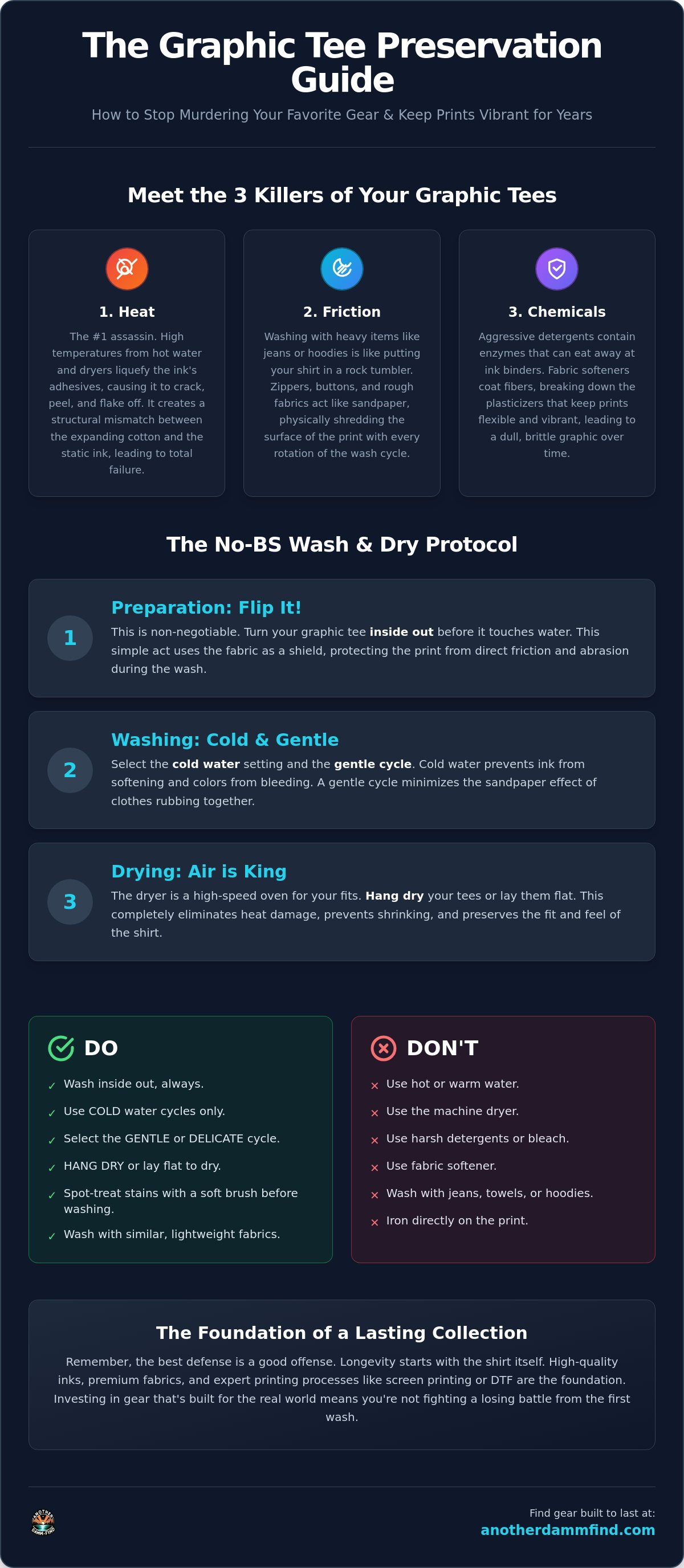
Heat creates a physical mismatch. Cotton fibers expand when they get hot, but the cured ink doesn't move at the same rate. This tension leads to the dreaded "cracking" that makes your shirt look like a relic from a basement. It's structural failure, plain and simple. Then there's friction. Throwing a tee in with heavy jeans or hoodies is like putting it in a rock tumbler. Metal zippers and plastic buttons act like sandpaper, shredding the top layer of the graphic one rotation at a time. Finally, stop trusting "heavy duty" detergents. Many cheap options use aggressive enzymes that literally eat organic materials like cotton and specific ink binders. Fabric softeners are even worse; they contain chemicals designed to coat fibers, which simultaneously break down the plasticizers that keep your prints flexible. If you want to master how to wash graphic tees, you have to treat these three enemies like the plague. No excuses.
The No-BS Wash Cycle: Cold, Inside Out, and Done
Laundry day is usually where good art goes to die. If you're just tossing everything in on "warm" and hoping for the best, you're a liability to your own wardrobe. Learning how to wash graphic tees isn't some delicate art form; it's about basic discipline. Cold water is your only option. Hot water is for sanitizing hospital sheets and making mistakes. When you crank the heat, you're basically inviting the ink to peel off and find a new home in your drain. Keep it cold, keep it gentle, and keep your dignity.
Select the gentle cycle. You don't need your clothes screaming in a high-speed blender. The goal is to minimize the sandpaper effect that occurs when fabrics rub together at high velocities. Less agitation means less wear on the print. It's a simple trade-off that keeps your gear looking fresh while others are wearing cracked, faded trash. If you actually care about the longevity of your Submarine Veteran Hoodies or custom prints, you'll stop treating the washing machine like a demolition derby.
Why Inside Out is Non-Negotiable
Flip the shirt. Do it every single time. No excuses. When you wash a shirt right-side out, the graphic is the front line in a war against every zipper, button, and rough seam in the load. By turning it inside out, you're using the cotton fabric as a structural shield. It's the simplest way to prevent friction from shredding your design. Plus, it keeps the colors on the "show" side from fading into a dull, grey version of their former selves. Even the FTC's Care Labeling Rule exists because manufacturers know that following specific instructions is the difference between a shirt that lasts a decade and one that lasts a month.
Choosing the Right Detergent
Most "heavy duty" detergents are trash for your prints. If the bottle says "Oxi" or mentions bleach-based power, keep it away from your dark tees. These chemicals are designed to aggressively strip stains, but they don't know the difference between a coffee spill and the ink on your shirt. They will eat the vibrancy right out of the art. Stick to liquid detergents. Powdered soaps are often abrasive and don't always dissolve fully in the cold water you should be using. Those undissolved particles act like tiny shards of glass against the print. And for the love of the craft, ditch the fabric softener; it’s literal poison for high-quality prints. Softeners work by coating fibers in a waxy film that breaks down the plasticizers in the ink, making it brittle and prone to cracking. You want your art to stay flexible, not coated in chemical sludge.
Drying Without Dying: Why the Dryer is Your Enemy
You survived the wash cycle. You think the hard part is over. You're wrong. The dryer is where most people commit slow-motion homicide on their favorite gear. Think of your dryer as a high-speed oven. It doesn't just remove moisture; it bakes the life out of the ink bond we discussed earlier. Even if you mastered how to wash graphic tees in the machine, throwing them into a hot tumble is a death sentence. Heat makes the cured ink brittle. Brittle ink cracks. Cracks turn into flakes. Flakes turn your high-end art into a vintage-style disaster you didn't ask for.
Hang drying is the gold standard for anyone who gives a damn about their collection. It's the only way to ensure zero heat damage. If you're stuck in a situation where you absolutely must use a machine, look for the "Air Fluff" or "No Heat" setting. Modern technology is finally catching up to our needs. As of June 2026, many new washing machines and dryers incorporate AI-powered features that sense fabric softness and density. These sensors can automatically adjust patterns to reduce wear, but they still can't beat the safety of a simple drying rack. While you're at it, check out some general laundry best practices to realize just how much we usually over-process our clothes.
The Case for Air Drying
Air drying isn't just about the ink. It's about the fit. High heat is the primary reason your 100% cotton tees shrink into midriff-baring crop tops after two washes. When you skip the dryer, you eliminate the pilling that makes a fresh shirt look like a fuzzy mess of trash. To avoid those annoying "shoulder nipples" caused by thin wire hangers, fold your shirt over the bar of the hanger or use wide, padded versions. You want the weight of the water to pull the wrinkles out, not stretch the collar into a cavernous void.
Ironing and Wrinkle Management
If your shirt looks like it was balled up in a corner, don't reach for the iron yet. Use a steamer. Steamers relax the fibers without the crushing weight and direct heat of a metal plate. If an iron is your only tool, flip the shirt inside out and place a thin pressing cloth between the iron and the fabric. Direct iron-to-ink contact is a terminal mistake that will melt your graphic into a smeared, plastic disaster on your ironing board. This is especially true for high-density prints or the lettering on our Rich Damm Original Lettering Prints; treat them with respect or watch them liquefy. Once that ink melts, there is no undo button.
Stain Removal and Long-Term Art Preservation
Stains are a reality of living, but they don't have to be a death sentence for your gear. If you spill coffee or drop a taco, don't just throw the shirt in the hamper and forget about it. That's how you lose. If you let a stain sit, it effectively "cures" into the cotton, making it a permanent, unwanted part of the design. You need to spot treat that mess immediately. Grab a soft-bristled brush, like an old toothbrush, and some mild detergent. Be precise. Focus on the surrounding fabric and stay away from the graphic itself. Scrubbing the ink is a rookie mistake. You'll just shred the top layer of the print and end up with a blurry, distorted mess. Mastering how to wash graphic tees means knowing when to be aggressive and when to back off.
Dealing with Pit Stains and Odors
White graphic tees are notorious for yellowing under the arms. It isn't just sweat. It's a chemical reaction between your aluminum-based deodorant and your body's proteins. To kill the funk without using boiling water, which we already established is an ink-killer, use the baking soda and vinegar trick. Make a paste. Let it sit on the pits for 30 minutes. Then follow your cold-water protocol. It kills bacteria naturally. It keeps the fabric from looking like a DAMM neglected gym towel. This is how you keep your white tees crisp without resorting to harsh bleaches that eat the ink alive.
Folding vs. Hanging
Stop hanging your heavy graphic prints. Over time, gravity is the enemy of your collar and shoulders. Heavy ink adds weight to the chest of the shirt. This eventually causes the fabric to sag and stretch into a distorted, unwearable mess. This is the primary cause of those annoying "hanger nipples" and collars that look like stretched-out rubber bands. Use the "drawer method" instead. Fold your shirts and stack them vertically so you can see every design at once. It's cleaner. It's faster. It preserves the structural integrity of the fabric. It's the final piece of the puzzle for how to wash graphic tees and keep them in the rotation for years.
If you want more tips on maintaining your look, check out the no-bs graphic tee guide for styling advice that actually matters. Once you've mastered the care, go grab some fresh Long Sleeve Graphic Tees that are built to last.
Why Quality Prints Matter (The Another DAMM Find Way)
You can follow every rule for how to wash graphic tees perfectly, but if the shirt was built to fail, it's a lost cause. Most fast-fashion brands sell you a disposable lifestyle. They use cheap inks and thin, flimsy fabrics that surrender the moment they hit the water. We don't do that. Our gear is built for people who actually live in their clothes. It's for the searchers, the collectors, and the people who want their shirts to tell a story for a decade, not just a week. If the foundation is trash, the care doesn't matter.
Being veteran-owned means we have a specific, non-negotiable relationship with durability. We don't cut corners on the ink or the fabric because we know what it's like to rely on gear that actually holds up. We use high-quality ink formulations designed to survive the real world. This isn't about sterile, mass-produced junk; it's about curated pieces that maintain their soul through every wash cycle. When you buy from us, you're getting a commitment to materials that respect the art as much as you do. We build it to last, not to be replaced in a month.
Built to Last
Our amputee humor designs aren't just about the laugh; they are cured for maximum durability. We prioritize specific cotton blends because they hold ink far better than 100% synthetics. Synthetic fibers often reject the ink bond, leading to that cheap, plastic-like peeling you see on bargain-bin gear. A proper blend allows the ink to bite into the fiber, creating a conversation starter that doesn't flake off. Whether it's our Submarine Veteran Hoodies or our Rich Damm Original Lettering Prints, the science of the bond remains the same. We make sure the ink and the fabric are locked in tight before it ever reaches your door.
Join the Community
When you pick up a piece from Another DAMM Find, you're joining a subculture that values authenticity over mainstream approval. This isn't just a transaction; it's a mission to keep unique, irreverent art alive and wearable. We operate outside the boundaries of polished, corporate boredom. If you're tired of worrying about laundry entirely, check out our funny veteran coffee mugs for gear that won't shrink or crack in the dishwasher. But for your apparel, the rules remain. Master how to wash graphic tees like you actually give a damn about the art you're wearing. Treat your gear with respect, and it will return the favor. Stay bold, stay raw, and keep your prints crisp.
Protect the Bond and Wear the Art
Stop treating your wardrobe like a low-budget crime scene. You now have the raw, no-BS strategy for how to wash graphic tees without turning your favorite gear into faded floor rags. It's a simple discipline. Flip the shirt inside out. Keep the water cold. Kill the heat. When you manage friction and temperature like a pro, you stop murdering the ink bond and start preserving the legacy of your collection. Art this good isn't meant to be disposable.
We do our part by being veteran-owned and operated, delivering high-impact designs and original hand-lettered artwork that can actually survive the real world. Our prints are built for the grind; you just have to keep them out of the oven. Treat your gear with a little respect, and it'll stay crisp through every rotation. No more shrinking into crop tops. No more cracked graphics. Just pure, unfiltered attitude that lasts.
Ready to reload your rotation with gear that stands its ground? Check out our latest bold, conversation-starting tees here and put your new laundry skills to the test. Wear it loud and keep it legendary.
Frequently Asked Questions
Can I ever use a dryer for my graphic tees?
Only if you use the "Air Fluff" or "No Heat" setting on your machine. Heat is a DAMM terminal diagnosis for the chemical bond between the ink and the cotton. If you must tumble, keep it cold. New AI-powered dryers can sense fabric density to reduce wear, but they still can't beat the safety of a drying rack. Otherwise, you're just baking the design until it flakes off.
How do I stop my graphic t-shirts from cracking?
Stop using heat and flip the shirt inside out every single time you clean it. Cracking happens when the fabric expands from hot water or dryer heat while the ink stays rigid. By washing cold and air drying, you maintain the flexibility of the print. It's the most effective way to keep the structural integrity of the design intact for years of wear.
Is it better to hand wash or machine wash graphic tees?
Hand washing is the safest bet, but a gentle machine cycle with cold water works fine for most people. Hand washing minimizes friction, which is the sandpaper effect that shreds the top layer of your art. If you use a machine, just make sure you aren't throwing them in with heavy denim or jagged zippers. It's a DAMM shame to lose a print to a rogue zipper.
What detergent is best for preserving t-shirt prints?
Use a mild liquid detergent that doesn't contain bleach or aggressive "Oxi" additives. Liquid soaps dissolve better in the cold water required for how to wash graphic tees. Avoid powders that can act as abrasives against the print and skip the fabric softeners. Softeners contain chemicals that break down the ink's plasticizers, making the art brittle and prone to failure.
How do I remove wrinkles from a graphic tee without an iron?
Use a handheld steamer or hang the shirt in the bathroom while you take a hot shower. Steam relaxes the cotton fibers without the crushing, direct heat of a metal iron plate. If you absolutely must use an iron, flip the shirt inside out and use a pressing cloth. Direct iron-to-ink contact is a terminal mistake that will melt your art into a plastic smear.
Should I use fabric softener on printed shirts?
Never use fabric softener on your graphic gear. Softeners coat the fibers in a waxy film that is specifically designed to break down the binders in the ink. It makes the print brittle and significantly increases the speed of cracking. You want your art to stay flexible and raw. Don't let chemical sludge ruin a DAMM good conversation starter.
What happens if I accidentally wash my graphic tee in hot water?
One hot wash won't always kill a shirt, but it immediately weakens the bond between the ink and the fabric. High temperatures start liquefying the adhesives that keep the graphic attached. You might notice the print feeling tacky or seeing the first signs of micro-cracking. Don't make it a habit or your shirt's lifespan will be cut by a massive percentage.
How often should I wash my favorite graphic tees to make them last?
Wash them only when they are actually dirty or start to smell. Every trip through the machine is a round of physical stress on the art. Learning how to wash graphic tees is half the battle; the other half is simply washing them less frequently. Minimize the cumulative damage from water and friction to keep your collection in the rotation for the long haul.


