


You just dropped fifty bucks on a limited release only to have it look like a dry lake bed after two cycles in the wash. It is a total scam. We have all been there. You pull your favorite design out of the dryer and it is a jagged mess of flakes and fractures. You feel ripped off because you were. Most brands are selling you plastic-heavy garbage that was never meant to last. Understanding why do graphic tees crack and peel is not just about laundry day; it is about the chemistry of cheap manufacturing and lazy curing processes.
It is time to stop wasting your cash on trash prints that cannot survive a single season. Between 92 million tons of textile waste generated annually and new 2026 regulations like the German Ink Ordinance finally hitting the industry, the era of low-quality junk is ending. You deserve gear that stays as loud as the day you bought it. I am going to give you the raw truth about print failure. You will learn how to spot high-quality DTF and screen prints before you tap buy. We are also covering the practical steps to keep your rotation looking fresh so you can stop feeding the landfill.
Key Takeaways
- Learn the chemistry behind why do graphic tees crack and peel. It all comes down to plastisol ink losing its grip on the fabric.
- Identify which printing methods are built for the long haul and which ones are destined to flake off after three washes.
- Stop treating your dryer like a torture chamber. Discover the specific laundry habits that are shredding your favorite designs.
- Separate the viral TikTok myths from the actual No-BS ways to save a dying print before you reach for the iron.
- Stop getting played by fast-fashion junk. Learn how to spot high-quality gear that stays loud and intact for years.
The Science of the Suck: Why Graphic Tees Crack
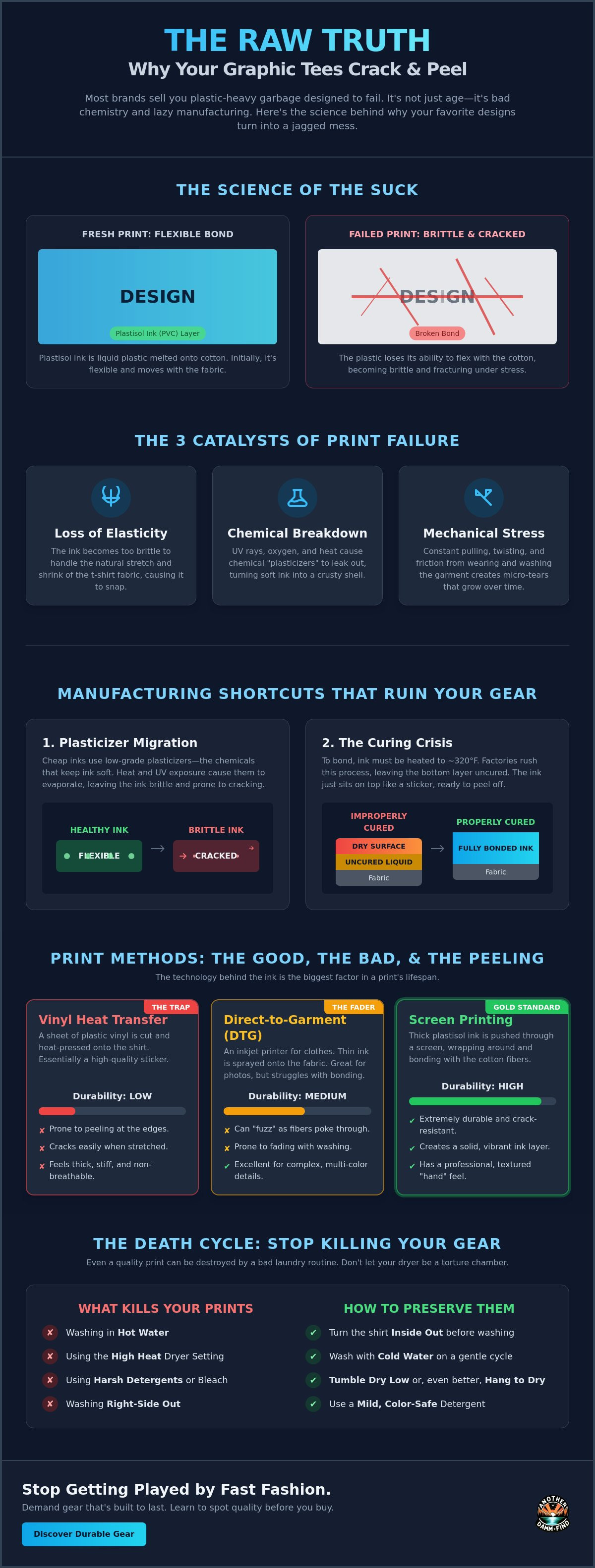
Your favorite shirt isn't just getting old; it is literally decomposing on your chest. Most of the graphics in your rotation are made using Screen printing with plastisol ink. That sounds professional, but here is the raw truth. Plastisol is basically liquid PVC. It is a layer of plastic melted onto cotton fibers. When you first buy the shirt, that plastic is soft and moves with you. But plastic and cotton are not natural allies. Cotton is a living, breathing fiber that stretches and shrinks. Plastic is a stubborn, synthetic jerk. If that plastic layer loses the ability to move with the fabric, it snaps. That is the fundamental reason why do graphic tees crack and peel. It is a total failure of flexibility.
There are three main reasons this bond fails:
- Loss of Elasticity: The ink becomes too brittle to handle the stretch of the shirt.
- Chemical Breakdown: Environmental factors eat away at the internal structure of the print.
- Mechanical Stress: Constant pulling and twisting during wear and washing.
When the ink can no longer handle the physical reality of being worn, it fractures. It starts with micro-cracks you can barely see. Then, those cracks grow until your design looks like a dry lake bed. It is a slow-motion car crash for your gear.
Plasticizer Migration 101
Plasticizers are the chemical additives that keep that PVC layer soft and rubbery. Without them, your graphic would feel like a piece of stiff plexiglass. Over time, these chemicals decide to bail. Exposure to UV rays, oxygen, and even high heat from your dryer causes these additives to evaporate or leak out of the ink. Plasticizer migration is the leading cause of ink brittleness. Once those chemicals migrate out, the ink turns into a dry, crusty shell. One good stretch and you have got a spiderweb of cracks that cannot be undone. Cheap inks use low-grade plasticizers that disappear faster than a shady landlord, leaving you with a ruined shirt in months.
The Curing Crisis
The curing tunnel is where a shirt is either forged or destroyed. To bond correctly, plastisol ink needs to hit a specific temperature, usually around 320 degrees, through the entire thickness of the ink. If the factory rushes the belt to save time, you get a curing crisis. The surface might look dry, but the bottom of the ink layer is still raw liquid. It never actually grabs the cotton fibers. This is a massive issue with mass-produced corporate merch. They prioritize speed over a real bond. If the ink is not fully cured, it will peel off in giant sheets because it is just sitting on top like a sticker. It is a lazy manufacturing shortcut that ruins your gear before you even wear it. This lack of quality control is a major factor in why do graphic tees crack and peel so quickly.
Print Methods: The Good, The Bad, and The Peeling
Not all gear is built to survive the street. You might think a graphic is just a graphic, but the tech behind the ink is usually the deciding factor in why do graphic tees crack and peel. Some methods are engineered for durability. Others are just cheap shortcuts designed to look good on a hanger for five minutes before turning into a flaky mess. If you want gear that actually lasts, you have to know what you are looking at before you drop your cash. It is a DAMM shame when a fresh design dies because the manufacturer went cheap on the ink.
High-quality production is about the bond. If the ink just sits on top like a bad habit, it is going to fail. This is where the divide between professional-grade apparel and fast-fashion trash becomes obvious. Even the best laundry habits that kill your gear won't save a print that was born to fail. You eventually realize that the secret to why do graphic tees crack and peel usually comes down to the printing method; it is rarely just about how hard you scrub it in the sink.
Direct-to-Garment (DTG) vs. Screen Printing
DTG is essentially a giant inkjet printer for clothes. It is great for hyper-detailed photos, but it often struggles with fiber bonding. Because the ink is thin, it can lead to "fuzzing" where the shirt fibers poke through the print after a few washes. Screen printing is the undisputed gold standard for veteran-grade gear. It uses thicker ink layers that actually wrap around the cotton fibers. You can feel the difference. Screen printing has a heavy, textured "hand" that feels like it could stop a bullet; DTG feels like a faint whisper on the fabric. It is the difference between a DAMM solid investment and a temporary fix.
The Vinyl Heat Transfer Trap
Vinyl heat transfers are the absolute bottom of the barrel. These are "sticker-style" graphics that are literally glued onto the shirt with a heat press. It is the cheapest, fastest way to make a shirt, and it is almost guaranteed to fail. The adhesive eventually gives up. You will see it start with "bubbling" in the center of the design before the whole thing peels off in one giant, pathetic sheet. It is a total scam. That is exactly why Another DAMM Find avoids cheap heat-press shortcuts for our amputee humor t-shirts. We don't do stickers. We do real prints that stay put. If you are tired of designs that flake away, sticking with high-quality screen prints is the only way to keep your rotation looking sharp.
The Death Cycle: Laundry Habits Killing Your Gear
You probably think your washing machine is a friend. It is not. It is a mechanical gladiator pit where your favorite designs go to die. If you are constantly asking why do graphic tees crack and peel, the answer is usually sitting in your laundry room. Your cleaning routine is likely a death cycle of heat, friction, and harsh chemicals. You are basically sandpapering your art every Sunday morning. Most people treat their laundry like a crime scene, tossing everything in and hoping for the best. That is a fast track to a ruined wardrobe.
The mechanical stress is the first wave of the attack. Top-loading machines with center agitators are the worst offenders. They grab the fabric and twist it with enough force to pull the ink right out of the cotton fibers. It is a physical tug-of-war that the print eventually loses. Then there is the chemical warfare. Most big-brand detergents are packed with "optical brighteners." These are designed to make whites look whiter, but they are aggressive chemicals. They can slowly dissolve the bond between the ink and the shirt. It is a total disaster for anyone who values their collection.
Friction is the silent killer in this process. When you toss your shirts in with jeans, those metal zippers and heavy buttons act like a grinder. Every tumble is a fresh strike against the graphic. You wouldn't rub a rock against your car's paint, so stop doing it to your clothes. Here is what is actually destroying your gear:
- Agitator Pull: Mechanical twisting that snaps the ink bond.
- Chemical Erosion: Harsh detergents eating the plasticizers.
- Abrasive Friction: Zippers and buttons acting like sandpaper.
The Dryer: The Ultimate Print Killer
The dryer is where the real carnage happens. It is a high-heat torture chamber. Remember that plastisol ink is essentially plastic. When you hit it with high heat, the ink tries to shrink. But the cotton it is bonded to shrinks at a different rate. This creates massive internal tension that causes the ink to snap. It is called the "oven effect." The heat bakes the plasticizers right out of the ink, making it brittle in record time. Air-drying is the only way to keep your damn art looking fresh. If you want your gear to survive, keep it away from the heat. This is a huge factor in why do graphic tees crack and peel before their time.
Turning It Inside Out (Actually Works)
This is the easiest habit you will ever form. Turn your gear inside out before it hits the water. This creates a fabric barrier between the wash water and the graphic. It drastically reduces the direct impact of the agitator on the surface of the print. It is a simple move that doubles the life of your submarine veteran hoodies. You are protecting the ink from the friction of other clothes. It is a low-effort, high-impact way to stop the rot. Stop being lazy and flip the shirt. Your gear will thank you.
Can You Fix a Cracked Graphic? (The No-BS Answer)
You are probably in the bargaining stage of grief. You are staring at a flaking design, scouring the internet for why do graphic tees crack and peel, and hoping for a miracle. Don't believe every "life hack" you see on your feed. Most of the quick fixes pushed by TikTok influencers are total garbage that will finish the job of ruining your shirt. Once the structural integrity of the ink is gone, you are mostly just managing a slow-motion disaster. There is no magic "undo" button for chemical degradation.
Fabric markers are a popular suggestion, but they are a temporary bandage at best. They don't fix the crack; they just color in the gap. The ink will still continue to flake away around the edges. Eventually, you have to decide if you are going to embrace the "distressed" look or if it is time to turn that shirt into a gym rag. If the art is truly dead, stop dragging its corpse around. It is a DAMM shame, but some gear just wasn't built to last.
The Ironing Method: Proceed With Caution
The only semi-legit way to fight back is the parchment paper and iron trick. You place a clean sheet of parchment paper over the graphic and hit it with a dry iron on the lowest heat setting. The idea is to slightly re-melt the plasticizers to fill in the micro-cracks. It can work for minor spiderwebbing, but you have to be careful. Never, ever let a naked iron touch a graphic print. You will end up with a melted plastic mess fused to your iron and a destroyed shirt. Once polymer chains are broken, a full repair is impossible. You are just buying a little more time before the next wash cycles finish the job.
Preventing the Next Disaster
The best fix is a solid defense. Before you drop cash on a new drop, use the "Pull Test." Grab the fabric on either side of the print and give it a gentle, steady tug. If you see the ink straining or hear a faint "pop" sound, that shirt is trash. Put it back on the rack. You should also check out our guide on how to wash graphic tees to keep your current rotation in the game. Investing in heavyweight cotton is another pro move. Thicker fabric doesn't stretch as much, which means the print doesn't have to work as hard to stay intact. If you are tired of wearing gear that falls apart after a month, grab a fresh shirt from Another DAMM Find and see the difference that real quality makes.
Why Another DAMM Find Gear Doesn't Quit
Most corporate apparel brands are looking for the fastest way to a profit margin. They use thin blanks and rushed curing tunnels. They are the primary reason why do graphic tees crack and peel before you even finish the payments on them. At Another DAMM Find, we don't operate on that frequency. We are veteran-owned. That means we don't do "fragile." We don't do "cheap." We build gear that is meant to be lived in, washed, and worn until it becomes a part of your history. If it is not tough enough for the street, it doesn't get our name on it.
Rich Damm's original lettering isn't just art; it is a statement. When we print a design, we prioritize deep ink bonding over high-margin corporate shortcuts. We aren't trying to churn out a million shirts a day. We are trying to make sure the one shirt you buy stays crisp for years. Our gear is built to survive more than just a light breeze or a single cycle in the wash. We know these shirts are conversation starters. A peeling, flaking shirt is a bad conversation. It says you settled for less. We don't settle, and we don't expect you to either.
Veteran-Owned Quality Standards
We bring a "Silent Service" mentality to everything we drop. In the submarine community, details are the difference between coming home and staying down. We apply that same intensity to our apparel durability. It starts with premium blanks. We don't use those paper-thin shirts that shrink four sizes the moment they see water. If the fabric doesn't shrink and distort, the ink doesn't snap. It is a simple concept that most brands ignore just to save a nickel. You can read more about our mission and the Another DAMM Find story to see exactly why we refuse to compromise on the raw art we produce.
The Final Verdict
You now know the science. You know the chemistry of failure and the laundry habits that act like a slow-motion execution for your clothes. The mystery of why do graphic tees crack and peel is solved. Now you have a choice. You can keep buying the same disposable fast-fashion junk that peels off like a bad sunburn, or you can invest in gear that actually holds up. Don't settle for trash prints that fade into nothingness after a month of wear.
Check out our full graphic tee guide for styling tips that last as long as the prints do. If you are ready for a shirt that actually stays in the rotation and keeps its edge, Shop the collection here. It is time to wear gear that is as loud and resilient as you are.
Stop Wearing Trash and Level Up Your Rotation
You have the blueprint now. You know the chemistry of ink failure and why your dryer is a literal torture chamber for your favorite designs. Understanding why do graphic tees crack and peel is the first step toward building a wardrobe that actually survives the street. No more getting ripped off by thin blanks and lazy curing. No more watching your hard-earned cash flake away like a bad sunburn. It is time to demand more from the brands you rep. Stop settling for corporate garbage and start respecting the art you wear.
At Another DAMM Find, we don't do fragile. We are veteran-owned and operated. We prioritize a deep ink bond that respects the hustle. You are getting original hand-lettered designs by Rich Damm that are printed to stay loud and stay put. We don't do high-margin shortcuts. We do high-quality prints that don't suck. You deserve gear that is as resilient as your personality. It is time to invest in pieces that carry real weight and real history.
Get gear that actually lasts; Shop Another DAMM Find now. Keep your rotation fresh, your art intact, and your attitude unapologetic.
Frequently Asked Questions
Is it possible to stop a graphic from cracking once it starts?
You can't actually stop it once the polymer chains snap. You are just managing a slow death. The parchment paper trick might buy you a few more weeks, but the structural integrity is gone. Once those cracks appear, the ink has lost its grip. It is a DAMM shame; you are better off repurposing it as a shop rag and buying gear that doesn't suck.
Does washing shirts in cold water really prevent peeling?
Cold water is a mandatory move for keeping your gear intact. Heat is a catalyst for chemical breakdown. When you use hot water, you are softening the plastisol and inviting it to peel away from the cotton. Cold water keeps the ink stable and the fibers tight. It is one of the easiest ways to delay the reality of why do graphic tees crack and peel over time.
Why do some prints feel 'thick' and others feel like they are part of the fabric?
It comes down to ink volume and chemistry. Thick, rubbery prints are usually plastisol screen prints. They sit on top of the fabric. Thinner, "soft-hand" prints are usually water-based or DTG. They sink into the fibers. Don't assume thick is bad. A heavy screen print is often way more durable than a thin, poorly cured digital print that disappears after three wash cycles in a cheap machine.
Can I put my graphic tees in the dryer on a low heat setting?
You can, but you are playing with fire. Even a low heat setting acts like a slow-cooker for your graphics. It dries out the plasticizers that keep the print flexible. If you value your art, air-drying is the only No-BS solution. Heat is the primary reason why do graphic tees crack and peel. If you must use a machine, pull it out while it is still slightly damp.
What is the best way to store graphic tees to prevent the print from sticking?
Hanging is the gold standard for preservation. If you must fold them, don't stack them twenty deep in a hot closet. The weight and heat can cause "blocking," where the ink from one shirt fuses to the back of another. If you have a high-value collection, place a sheet of acid-free tissue paper between the folds. It keeps the designs isolated and prevents the ink from sticking together.
Are expensive graphic tees less likely to crack than cheap ones?
Price is a liar. You are often paying for a logo or a specific cut, not the ink quality. Plenty of "luxury" brands use cheap DTG methods that fail faster than a budget blank. You have to look at the manufacturing details. Check for heavyweight cotton and a solid screen print bond. High-quality gear doesn't have to be overpriced; it just has to be built with a veteran-grade mindset.
How do I know if a shirt is screen printed or DTG before I buy it?
Use your hands. A screen print will have a distinct, raised texture that you can feel with your fingernail. It feels like a layer of rubber. DTG is almost flush with the fabric and often looks a bit more pixelated if you look closely. If the shirt has a faint, vinegar-like scent, that is the DTG pre-treatment. Screen printing is the undisputed gold standard for long-term durability.
What should I do if my print starts bubbling after the first wash?
Take it back to the shop immediately. Bubbling is a sign of a massive curing failure or cheap adhesive. The ink never bonded to the fibers; it is going to peel off in sheets within another wash or two. This is not a "wear and tear" issue. It is a manufacturing defect. Don't accept a ruined shirt because a factory rushed the heat tunnel process just to save a few seconds.


