


Most winter gear is built for people with four limbs and zero metal parts, leaving the rest of us to freeze or look like a walking medical case study. It’s a damn joke. When the thermometer hits 32 degrees, your residual limb shouldn't feel like it’s being crushed in a cold vice. You need actual winter clothing solutions for amputees that don't require a mechanical engineering degree just to zip up a coat before the bus arrives.
You already know the drill. Cold weather brings phantom pain spikes that feel like a 220v shock and silicone liners that get brittle enough to crack. You want to move through the slush without feeling like a fragile piece of medical equipment. We’re here to make sure you stop freezing your damn residual limb and start mastering the tactical art of winter layering. This guide breaks down the specific moisture-wicking fabrics that kill nerve pain and the high-performance gear hacks that get you out the door in under 5 minutes while looking like a person, not a patient. It’s about the hunt for warmth and the damn grit to keep moving.
Key Takeaways
- Stop letting sub-zero temps turn your residual limb into a tactical nightmare by mastering the science of circulation.
- Own the three-layer system and discover the most effective winter clothing solutions for amputees to stay dry and rash-free.
- Hack your damn wardrobe with easy DIY mods that make standard pants work with bulky prosthetic hinges.
- Secure your footing with boot-selection strategies that keep your prosthetic aligned and your ass off the ice.
- Ditch the boring medical-grade aesthetic and learn to integrate bold, high-vibe apparel into your survival gear.
Why Winter is a Damn Tactical Nightmare for Amputees
Winter is a damn thief. It steals your mobility, your comfort, and your sanity. For everyone else, the first snowfall is a vibe. For you, it is a biological siege. Cold weather is not just a minor annoyance; it is a tactical nightmare that turns your residual limb into a literal heat sink. When the mercury drops below 32 degrees, your body stops playing fair. It starts prioritizing your core, leaving your stump to fend for itself in the frost. Finding the right winter clothing solutions for amputees isn't just about fashion; it's about surviving a season that wants to lock you indoors.
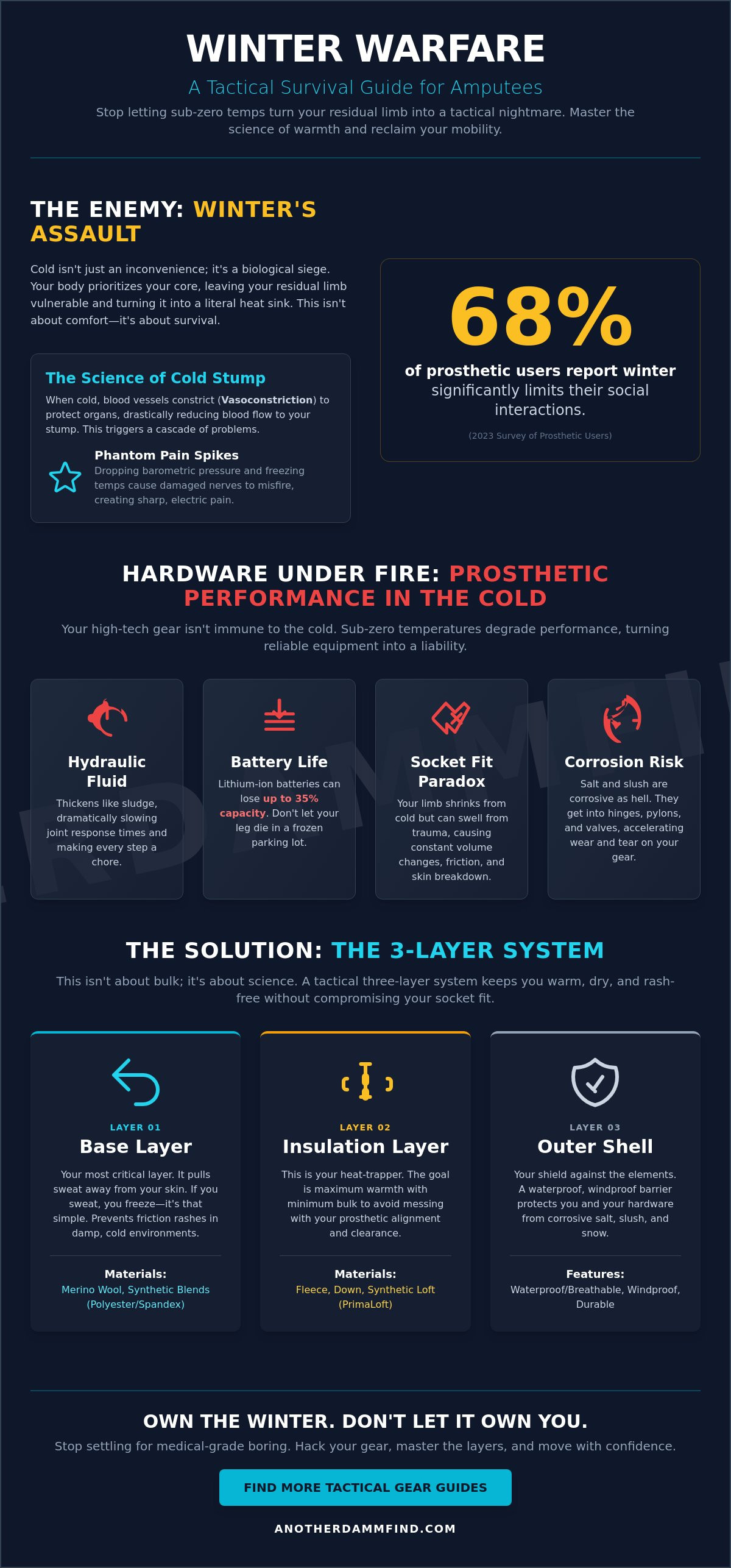
The "cold stump" phenomenon is a real, physiological grind. Without the same muscle mass or blood flow as a full limb, your residual limb loses heat faster than a cheap thermos. This leads to a vicious cycle of discomfort and isolation. When every step feels like you are walking on a frozen block of wood, the couch starts looking like a permanent destination. In a 2023 survey of prosthetic users, 68 percent of respondents reported that winter weather significantly limited their social interactions. That is a heavy psychological toll for a few months of snow.
The Science of Cold and Limb Loss
Vasoconstriction is the enemy here. When you get cold, your blood vessels tighten up to keep your internal organs warm. Your residual limb is at the end of the line, meaning it gets the least amount of warm blood. This lack of circulation turns your skin purple and makes your nerves go haywire. Phantom pain doesn't just linger during a storm; it screams. The drop in barometric pressure that precedes a blizzard can trigger intense, throbbing sensations in a limb that isn't even there.
Cold-induced nerve pain is a sharp, electric malfunction where damaged nerve endings misfire in response to dropping barometric pressure and freezing temperatures.
Prosthetic Performance in the Cold
Your hardware hates the ice as much as you do. If you use a hydraulic knee, you will notice it moving like sludge when the temp hits 20 degrees. The oil inside thickens, increasing resistance and making every step a damn chore. Electronic components are even worse. Lithium-ion batteries in high-tech prosthetics can lose up to 35 percent of their capacity in sub-zero environments. You don't want your leg dying while you are halfway across a frozen parking lot.
Then there is the fit paradox. Cold weather often causes your limb to shrink as blood leaves the area, but the trauma of walking on frozen ground can cause reactive swelling. Your socket stays the same size while your limb is changing by the hour. It is a recipe for blisters and skin breakdown. This is where Adaptive clothing becomes a critical part of your kit. You need layers that allow for quick adjustments to your socket and suspension system without stripping down in a snowbank, which is why effective winter clothing solutions for amputees are a mandatory part of your cold-weather survival strategy.
- Hydraulic Fluid: Thickens in the cold, slowing down joint response times.
- Battery Life: Drops by 30 to 40 percent in extreme cold.
- Socket Fit: Volume changes lead to increased friction and skin irritation.
- Maintenance: Keep your valves clean; salt and slush are corrosive as hell.
Layering Like a Pro: The Science of Keeping Stumps Warm
Cold is a damn thief. It steals your mobility and turns your residual limb into a literal ice block if you aren't careful. Finding the right winter clothing solutions for amputees isn't about looking like a puffy marshmallow. It is about tactical layering that respects the hardware. You need a three layer system that breathes, traps heat, and blocks the elements without choking your socket fit.
Your base layer is the most critical. If you sweat, you freeze. It is that simple. A moisture wicking base layer keeps the skin dry and prevents the friction rashes that thrive in damp, cold environments. Over that, you need insulation. The trick is finding high loft materials that provide warmth without adding 3 inches of bulk that mess with your prosthetic clearance. Finally, the outer shell is your shield. Salt, slush, and snow are corrosive. You need a barrier that keeps the grit away from your hinges and pylons. This Winter Safety Guide confirms that moisture management is the difference between a good day and a medical issue.
Material Breakdown: Merino vs. Synthetics
merino wool is the undisputed king of residual limb socks. It stays warm even if it gets damp and it naturally fights the funk. Synthetics are great for the "stretch" factor, especially blends with 5 percent spandex that keep their shape after a long day of movement. Avoid cotton at all costs. In the outdoor world, we call it the "death fabric" because it absorbs 27 times its weight in water. Once it gets wet, it stays wet, pulling heat away from your stump until you are numb. Stick to technical fabrics if you want to keep your vibe high and your body temp stable; you can even explore Sportswear from specialized manufacturers to see how these performance materials are professionally utilized.
Managing the Liner-Stump Interface
Winter air is incredibly dry, which turns your skin into sandpaper. When you are looking for winter clothing solutions for amputees, don't ignore what is happening inside the liner. Use a high quality, non-water-based moisturizer at night to keep the skin supple. During the day, your liner and stump shrinker actually act as part of your thermal strategy by trapping a thin layer of air. If your circulation feels sluggish, spend 5 minutes doing active range of motion exercises before you head out. It gets the blood pumping to the extremities before the cold hits. If you need a solid base to start your kit, check out some damn good vintage layers that actually last.
- Base Layer: 100 percent Merino or high grade polyester.
- Mid Layer: Lightweight fleece or "active" insulation.
- Shell: GORE-TEX or DWR treated nylon to repel salt.
The goal is a kit that moves with you. Don't let the temperature dictate your hunt. Gear up, layer right, and keep the hardware protected from the winter trash.
Adaptive Mods: Hack Your Own Winter Gear
Listen. You don't need a $400 adaptive coat to survive the freeze. That is a corporate scam. Most effective winter clothing solutions for amputees involve taking the gear you already love and making it work for your specific body. It is about grit. It is about a little bit of DIY magic. Forget those sterile, medical-grade catalogs that look like they belong in a hospital. We are talking about tactical upgrades that keep you warm without draining your bank account. You own your style. You should own your modifications too.
Side-seam modifications are the holy grail for leg amputees. Bulky prosthetic hinges and heavy winter fabrics do not get along. If your pants are too tight to fit over the socket, they will bunch up and kill your circulation. Rip that seam open. Install a heavy-duty zipper or some industrial Velcro. It is a damn game changer for accessibility. Magnet closures are another essential upgrade. When it is 10 degrees outside and your fingers feel like frozen sausages, buttons are basically impossible. Swap them out. It takes twenty minutes with a needle and thread. It saves you an hour of frustration every single morning.
Don't ignore the small stuff like zipper pulls. Standard pulls are tiny and pathetic. They are useless when you are wearing heavy winter gloves. Add a loop of paracord or a tactical plastic pull tab. It gives you leverage. It makes your gear functional again. This is how you win against the cold. You don't wait for a brand to design something for you. You build it yourself.
The DIY Adaptive Clothing Toolkit
You only need a few basic items to start modding your wardrobe. Grab a seam ripper, some industrial-strength Velcro, and heavy-duty magnets. If you want to add a side zipper to your standard jeans for easy socket access, start by opening the outer seam carefully. Measure from the waistband down to three inches below the widest part of your socket to ensure the zipper opening provides enough clearance. This mod lets you adjust your fit or tension on the fly without stripping down in the snow. It is practical. It is smart. It is damn necessary for anyone living with a prosthetic in a cold climate.
Outerwear Hacks for One-Handed Dressing
Zippers on heavy winter jackets are a nightmare for one-handed dressing. The struggle is real. Replace those standard zippers with magnetic versions that snap together instantly. No more fumbling in the wind. If standard sleeves are a struggle, try the poncho strategy. An oversized, modified poncho provides massive warmth and zero restriction. It is a bold, high-impact look that actually works for your lifestyle. Once you have customized your kit, you need to maintain it properly. Check out this guide on how to wash graphic tees to keep your modded gear fresh and avoid ruining the damn art on your favorite layers. High-impact gear requires high-impact care. Keep your kit clean and your mods tight.
Footwear and Traction: Don’t Eat the Pavement This Year
Balance isn't a suggestion. It's survival. When the sidewalk hits 32 degrees and turns into a sheet of glass, your prosthetic doesn't feel the slip until you're already looking at the sky. Gravity is a hater. You need a strategy that doesn't involve a trip to the ER. Real winter clothing solutions for amputees start from the ground up. If your traction sucks, the rest of your kit is just expensive laundry for a hospital bed. You need gear that bites back at the ice.
Finding the Right Boot for Your Prosthetic
Heel height is the silent killer of a good walk. A 10mm shift in your boot’s heel can tilt your entire pylon and wreck your gait before you even leave the mudroom. Stick to boots with a neutral drop or find a pair that matches your prosthetic’s pre-set alignment perfectly. Look for wide-fit options. Carbon fiber feet don't compress like flesh; you need that extra volume to actually get the damn thing inside the shoe. Waterproofing is a requirement, not a luxury. Use a silicone pylon cover or a rugged gaiter to keep the slush out. Road salt will corrode your expensive components in 60 seconds if you give it an opening.
Crutch and Cane Safety in Snow
If you're using sticks, get the damn ice tips. These retractable spikes are a 100% non-negotiable for winter safety. Standard rubber tips turn into hockey pucks on frozen slush. When you're hitting those curb cuts, keep your weight centered. A 5 degree shift in your center of gravity on black ice is the difference between a clean walk and a wipeout. Take shorter steps. Move with intent. Maintain your equipment like your life depends on it, because on a 15 percent incline in a snowstorm, it actually does.
- Yaktrax and Spikes: These are the ultimate cheat code. Slip them over your boots before you step off the porch.
- Winter Foot Setup: If your budget allows, a dedicated winter foot with a higher grip rating or a sand/snow specific build is a game changer.
- Alignment Check: Visit your prosthetist in November. A quick adjustment for winter footwear saves your lower back from a season of misery.
Don't let the weather dictate your mobility. Most winter clothing solutions for amputees focus on the fabric, but the real battle is won at the point of contact with the frozen earth. Stay upright and stay dangerous. Grab some damn good winter gear to keep your vibe high and your body warm while you navigate the freeze.
Style vs. Survival: Don’t Settle for Medical-Grade Boring
Winter clothing solutions for amputees shouldn't look like they were designed in a sterile lab by people who have never touched pavement. Most adaptive gear is beige, boring, and soul-crushing. It feels like wearing a hospital gown with sleeves. You don't lose your personality just because the temperature drops below forty degrees. You aren't a patient. You're a human with a damn pulse and a sense of style that shouldn't die in December.
Dressing for the cold is about more than just trapping heat. It's about maintaining your identity when the world gets grey. Function matters, but if you feel like a clinical trial while wearing it, the gear has failed. You need pieces that work with your prosthetic or your chair without making you look like a walking medical supply catalog. Integrate bold textures and heavy fabrics that scream authority rather than "help me."
Wearing Your Attitude on Your Sleeve
Layers are functional, but what you wear under that heavy parka is your real defense. When you're at the bar and peel back the Gore-Tex, you shouldn't reveal a plain, sad undershirt. A loud graphic tee is a tactical move. It signals that you're still here and you still have a voice. Check out the no-bs graphic tee guide to see how to layer bold prints without looking like a damn marshmallow.
Humor is your best shield against the winter blues and the inevitable stares. People look. It’s a fact of life. You can get pissed, or you can lean into the absurdity of it all. Embracing amputee humor is a superpower that shuts down the pity look faster than anything else. It turns a cold stare into a shared laugh. That's how you win the winter. You control the narrative, not the onlookers.
The Another DAMM Find Philosophy
We don't do "inspirational" posters or soft-focus commercials. We build gear for the people who actually live this life and refuse to be a sob story. Another DAMM Find is a veteran-owned operation. We know the grind. We know the phantom pains that get aggressive when the frost hits. Our winter clothing solutions for amputees focus on the vibe as much as the thermal rating.
- Support veteran-owned businesses that actually get the struggle.
- Share your hacks with the tribe; if a specific liner works, say it.
- Reject any clothing that makes you feel "less than."
- Prioritize authenticity over mainstream approval.
Don't hoard your survival secrets. If you found a specific velcro hack for your sleeve or a way to keep your stump warm without the bulk, tell the community. We thrive on shared intel. Gear up, stay warm, and don’t take any crap from the weather or the people around you. Stay loud. Stay damn authentic.
Own the Cold, Don't Just Survive It
Winter isn't just a season; it's a tactical disaster for your mobility. You've got the science of layering down to protect your limb from those sub-zero wind chills. You know how to hack your gear so it actually works for your body. Finding effective winter clothing solutions for amputees shouldn't mean looking like a clinical experiment. It's about grit and gear that handles the 32-degree slush without falling apart. Stop settling for the beige, soul-sucking options from big-box medical suppliers. We are a 100 percent veteran-owned and operated crew making gear for people who actually live this life. Our no-BS designs are built for the daily grind. These high-quality prints are tested to survive 50-plus cycles in a heavy winter wash without fading or cracking. You deserve gear that looks as hard as the work you put in every single day. Grab something that matches your energy and keeps you moving through the ice.
Check out our bold apparel for people who give a damn
Stay warm, stay upright, and keep hunting for those wins.
Cold Hard Truths: Winter FAQ
Is it normal for phantom pain to increase during winter months?
Yes, phantom pain spikes when the mercury drops because barometric pressure changes trigger nerve endings. The Amputee Coalition reports that 80 percent of patients experience increased sensitivity or pain during weather shifts. It's not in your head; it's a physiological response to the cold. Keep that limb insulated with high-quality sleeves or the nerves will scream all damn day.
Can I use hand warmers inside my prosthetic liner?
Never put chemical hand warmers directly inside your liner because they can reach temperatures of 150 degrees Fahrenheit. Since liners are airtight, heat has nowhere to go and will cook your skin before you even feel the burn. Use external heat wraps or thick wool covers over the socket instead. Protecting your skin is the first rule of winter clothing solutions for amputees.
What are the best fabrics for amputee base layers?
Merino wool and high-performance synthetics like polyester are the only layers worth your time. Cotton is a death trap in the cold because it holds moisture and loses 95 percent of its insulating properties when wet. Stick to 100 percent merino wool to wick sweat away from your residual limb. It keeps you warm even if you start to perspire under those layers.
How do I stop my prosthetic foot from slipping on ice?
Slip a pair of heavy-duty ice cleats like Yaktrax over your boot or swap to a specialized winter foot shell with extra grip. Research shows that 30 percent of winter prosthetic repairs stem from falls on black ice. Don't trust a standard rubber sole when the ground is a skating rink. Get some damn traction before you end up in the shop.
Are there specific winter coats designed for arm amputees?
Yes, brands like Tommy Hilfiger Adaptive and MagnaReady use magnetic closures instead of traditional zippers. These 2023 designs allow you to snap a jacket shut with one hand in seconds. If you're rocking a vintage find, a personal tailor service like Your Tailor Robin can swap a stubborn zipper for magnets or velcro. It's about making the gear work for your life, not the other way around.
How can I make my own pants adaptive for a prosthetic leg?
Rip the side seam of your favorite denim and install a 12 inch zipper or heavy-duty velcro strips. This allows you to access your prosthetic adjustments without dropping your pants in a frozen parking lot. It's a 20 minute sewing job that saves you hours of frustration. You don't need a special brand when you've got a seam ripper and some grit.
Do electronic prosthetic knees fail in freezing temperatures?
Electronic knees like the C-Leg don't usually fail, but their lithium-ion batteries lose 20 percent of their capacity once temperatures hit 32 degrees Fahrenheit. Most microprocessors are rated for operation down to 14 degrees, but the cold makes the hydraulic fluid sluggish. Keep the joint covered with a neoprene sleeve to maintain a steady operating temperature. These winter clothing solutions for amputees keep your tech running smooth.
What should I do if my residual limb gets frostbite?
Seek medical attention immediately and rewarm the area using water between 98 and 102 degrees Fahrenheit. Never rub the skin or use a heating pad, as this causes permanent tissue damage to compromised nerves. Frostbite can set in within 30 minutes if skin is exposed to sub-zero winds. Get inside, get dry, and let a professional check the damage before you put the leg back on.


